Your First Salsa Class: A Practical Plan Before, During and After
Your first salsa class does not need to be a test of whether you are a natural dancer. Treat it as a chance to find out how the class works, meet the teacher and try a small number of movements. You can arrive without a polished routine or a wardrobe of dance clothes. A useful first-night goal is simpler: understand one instruction, practise it with attention and leave knowing what you want to ask next.
Check the class before you book
Look for an absolute-beginner class rather than assuming that an open-level session starts from zero. Ask whether it is a one-off introduction, a drop-in lesson or the first week of a course. Find out the arrival time, the actual lesson time and whether a social dance follows. These details help you plan the evening without confusing a party with a taught session.
Ask which style and timing the class teaches. If those words are unfamiliar, our guide to salsa styles gives you a useful starting point. You do not have to choose a permanent identity as a dancer. You are simply checking that you know what the teacher means when they demonstrate the basic.
Ask about partners rather than assuming
School policies vary. City Academy describes beginner tasters with partner rotation, while Salsateca welcomes solo attendees and also explains how couples can request to stay together. Check your own class policy if either arrangement matters to you.
You can also ask how leading and following are introduced. Tell the teacher which role you would like to explore, or ask for help choosing. Arriving with a friend does not mean one of you must already know how to lead. Neither role requires you to teach the other person.
Pack for an ordinary evening of learning
Choose clothes that let you take a small step and raise your arms comfortably. Check the venue’s footwear instructions before buying anything. Bring water, your booking details and a clean change of top if you would appreciate one afterwards. Leave bulky bags away from the dancing space and keep valuables somewhere you can manage without carrying them during class.
If you have a practical access requirement, contact the organiser ahead of time. Ask about the room, breaks or any adjustment that would help you participate. A short conversation is more useful than guessing from a promotional photograph.
Give yourself three jobs in the room
First, watch the whole demonstration once before trying to remember every detail. Second, keep your movements small enough to notice where your weight goes. Third, ask one specific question when something is unclear. “Which foot is free here?” is easier to answer than “Why can’t I do this?”
When the teacher changes partners, introduce yourself briefly and start again. If you lose the sequence, return to the basic or pause and listen. You do not need to rescue the combination with a move you saw online. Let the teacher decide when to add another layer.
Make a short note afterwards
Before leaving, ask what to repeat at home and whether the next class continues the same material. Write down the class style, one movement name and one question. That small record can make your second visit feel much less unfamiliar.
For your next practice, choose one short task: listen to the class song, repeat the basic slowly or review your notes. Our page on getting started with salsa connects those first lessons with listening and social dancing. There is no need to turn the evening into a race through every beginner skill.
Two common first-class questions
Do I need to be good before I go?
No. Choose a class explicitly intended for new dancers and tell the teacher that it is your first visit. Ask for clarification whenever you need it.
Should I stay for the social afterwards?
You can watch, try a simple dance or leave after class. Check whether the social is included and beginner-friendly, then decide what suits your evening.
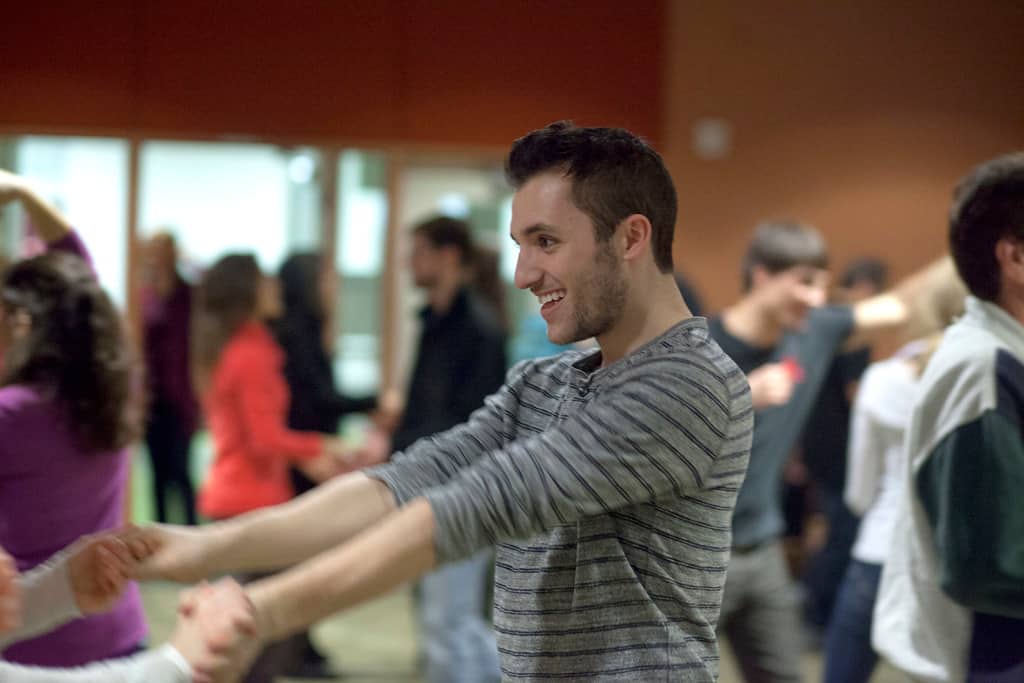
Photo: COD Newsroom / CC BY 2.0. Dancers at a Salsa, Merengue and Bachata event at College of DuPage in 2015. Illustrative archive photograph; not a photograph of the current event or specific attraction discussed. Resized and JPEG-compressed.